


The stacker is mainly used to stack or pile up items or goods according to certain rules or instructions. By adopting advanced electronic control technology and robotic arm control technology, it can accurately and efficiently complete the stacking task, thereby enabling the automation of production lines and improving work efficiency while reducing labor costs. During daily use, various types of minor and major faults are inevitable. Today, we will summarize some common faults of stackers and their handling methods.
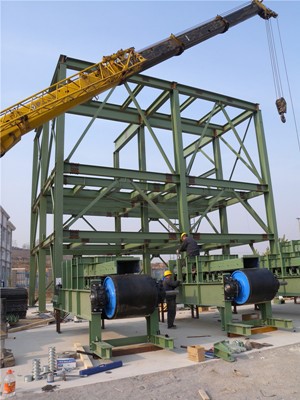
Common faults:
1. Mechanical faults, such as damage or malfunction of mechanical components, like motors, belts, etc.
2. Electrical faults, such as short circuits in circuit boards or damage to components.
3. Sensor faults, such as malfunction of photoelectric sensors or limit switches.
4. Program faults, such as program errors or incorrect parameter settings.
Solution methods:
1. Mechanical failure: Check if mechanical components are damaged or malfunctioning, such as motors and belts. If necessary, replace them.
2. Electronic failure: Check if the circuit board and components are damaged. If necessary, replace them.
3. Sensor failure: Check if the photoelectric sensors or limit switches are malfunctioning. If necessary, replace them.
4. Program failure: Check if the program is correct. If not, re-write the program or reset the parameters. 5. Other faults: If the capacity is insufficient, additional control circuits or an upgrade of the control system will be required.


