


How to determine if the bag clamping device of the container bag packaging scale is leaking
In industrial production, the bag clamping device of the container bag packaging scale is a crucial component for ensuring accurate material measurement and packaging sealing. If the bag clamping device leaks, it not only affects the packaging quality but also may lead to waste of raw materials and pollution of the production environment. Therefore, it is extremely important to master quick and accurate judgment methods. Here are several practical detection and judgment techniques:
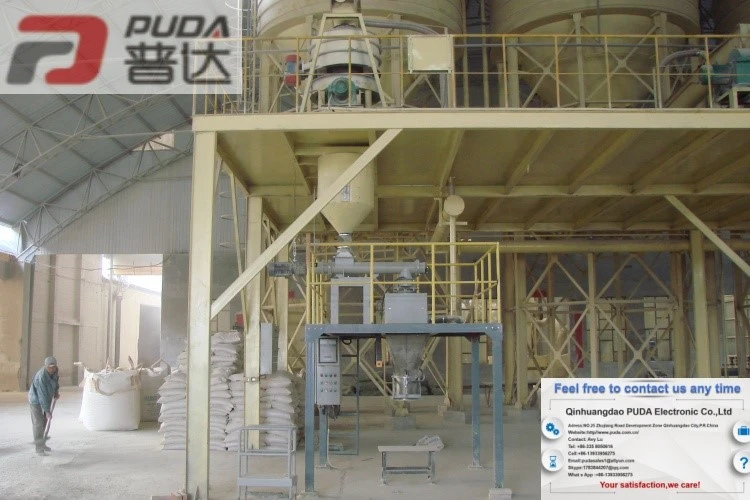
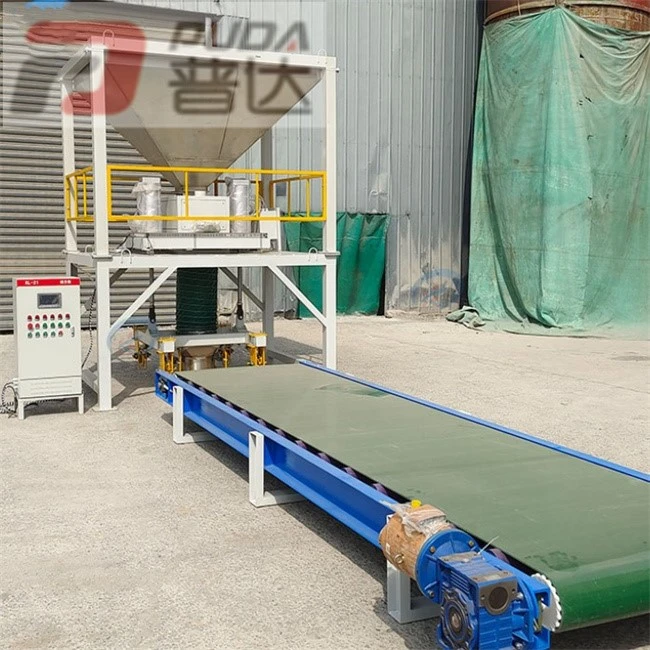
1. Visual Form Inspection Method
This is a very straightforward and basic way of judgment, which doesn't require any additional tools. All you need to do is to observe carefully and you will be able to spot obvious abnormalities.
1. Observe the pressure state of the bag opening: After starting the bag clamping procedure, carefully observe the process of the bag opening being clamped. A normal bag clamping should result in the formation of uniform folds at the bag opening and continuous, uniform pressure being applied. If you notice obvious gaps in certain areas or the bag opening shows an irregularly loose state, it indicates that the clamping force may be insufficient or there is a failure in a certain area.
2. Check the sealing surface fit: After the device is clamped, inspect the edge area where the bag clamp and the集装袋 come into contact. Under normal conditions, they should be tightly adhered together. If any obvious lifting, unilateral bulging, or local separation is observed, this usually indicates that the sealing elements (such as rubber blocks, pressure plates) are worn or deformed, which is the main cause of subsequent leakage.
3. Pay attention to foreign object interference: Check if there are any scattered material particles stuck between the sealing surfaces in the bag-attachment area, or if dust or loose threads have damaged the originally smooth contact surface. These tiny foreign objects are often the "culprits" causing local micro-leaks.
II. Observation Method of Trace Residues
By observing the traces left by the leakage, the location and severity of the leakage point can be identified very intuitively.
Observation of powder-based materials: For dry materials such as cement, starch, and chemical powders, when the bag-enclosed device is closed and no materials have been added, try gently shaking the equipment or slightly blowing air into the bag. Then observe whether there is any dust rising around the bag opening or adhering to the outer wall of the equipment. You can also shine a flashlight from the side in a dim light environment to see if there are any fine powder particles reflecting light.
2. Observation of particles and liquids: For granular materials or liquids, after bagging, you can touch the edge of the bag opening (be sure to take precautions against heat and chemical corrosion) or insert a thin paper test strip into the suspected gap. If there is material seeping and wetting the test strip, or if you can feel a distinct moist sensation, it indicates the presence of a leakage channel at that location.
III. Implement Dynamic Sensing Method
The performance of the pouching device during operation can also reflect its health condition.
Listen for abnormal sounds: When the cylinder or motor drives the bag-securing device to operate, carefully listen to the sounds. If you hear a distinct air leakage sound (similar to the sound of whistling) or a harsh sound from mechanical friction, this usually indicates that the pneumatic components (such as air pipe joints, sealing rings) are damaged, or there is a jam or wear in the mechanical transmission parts.
2. Perception of Vibration and Resistance: During the operation of the bagging device, the operator can sense the smoothness of the movement through experience. If they feel that a certain cylinder is not functioning properly, the speed is significantly reduced, or there is abnormal and intense shaking during the clamping process, this could be a precursor to unstable clamping. It is necessary to promptly check whether the internal pressure is within the standard range or if the mechanical structure is loose.
IV. Empty Bags and Simulation Testing Method
This is a very reliable preventive testing method and is recommended to be included as a routine item in daily inspections.
Negative pressure inhalation test: Without placing any materials inside, place the bag over the bag opening and start the clamping procedure. Then, place a dry paper towel or thin plastic film around the edges of the bag opening. Next, quickly release the clamping mechanism (or manually open the exhaust valve to create a slight negative pressure environment). If the paper towel is tightly adhered to the edge of the bag opening, it indicates a tight clamping; if the adhesion is weak or there is gas/dust blowing out from a specific direction, there is a leakage gap in that direction.
2. Pressure retention test: After clamping the empty bag, cut off the power source (such as turning off the air pump or keeping the electromagnetic valve energized for a certain period of time), and observe whether the pressure gauge reading drops steadily. If the pressure drops rapidly, it indicates that there are significant external or internal leakage points in the system, which will inevitably affect the actual clamping effect.
V. Identify common potential hazard areas
During the inspection process, attention should be focused on several key components that are prone to malfunction:
• Rubber gaskets/foam pads: These are components that tend to deteriorate easily. Prolonged exposure to force can lead to a decrease in elasticity, surface cracking or deformation, thereby losing their sealing function.
• Guide rod and slider: If the up-and-down movement of the bag-clamping device is not smooth enough, it will result in uneven force distribution, causing some areas to fail to fit tightly together.
• Fasteners and connecting parts: Check if all bolts and nuts show any signs of loosening. Long-term mechanical vibration can easily cause fasteners to come loose, resulting in mechanical clearance.
Through the above multi-dimensional comprehensive observation and testing, the sealing performance of the bag-securing device of the container bag packaging scale can be effectively judged. Once any abnormalities are detected, worn parts should be replaced or mechanical parameters adjusted promptly to ensure the stable operation of the production line.


