Meidy Katrin Lengkey, Secretary-General of the Indonesian Nickel Mining Association (APNI), on the opportunities and challenges for nickel mining and processing in Indonesia in 2023. The opportunities are great, but the challenges are not easy.
Presenting materials at Nickel Outlook 2023 Indonesia: Petromindo's "Unlocking Nickel Value in Electric Vehicle Battery Boom" at JW Marriott Hotel Jakarta on Thursday, Meidy Katrin Lengkey briefly conveyed the downstream nickel mining and industrial situation happening in Indonesia.
Several points were communicated, including those relating to the number of mining business licenses (IUps) prior to the rescinded IUP Act of 2,078, for a total of 338 IUps. And then the remaining 286 IUP. IUP was distributed in South Kalimantan with 2 IUP, Central Sulawesi with 98 IUP, South Sulawesi with 5 IUP, Southeast Sulawesi with 122 IUP, North Maluku with 42 IUP, Maluku with 2 IUP, West Papua with 4 IUP and Papua with 1 IUP.
"The number of IUps is likely to increase as several mining companies whose IUP was revoked are contesting, including through legal proceedings at the administrative court," said Meidy Katrin Lengkey.
Meidy Katrin Lengkey is concerned that the amount of nickel IUP out of proportion to the amount of downstream nickel processing industry will disrupt the supply chain of nickel feedstock to the smelter.
He also responded to the EU case at a WTO panel meeting. He said the Indonesian government has repeatedly imposed a ban on nickel exports. It was implemented in 2017, then reopened for exports, and then imposed the export ban again at the end of 2019.
When the export ban was imposed in 2020, there were no hydrometallurgical plants that processed low-grade nickel ore or limonite using HPAL technology.
"That means there is no domestic demand for low-grade nickel at the moment. On the one hand, we as individuals or entrepreneurs regret that the government continues to waste this low-grade nickel ore. On the other hand, because of the policy of prohibiting the export of nickel raw materials, we have no chance to gain benefits, "said Meidy Katrin Lengkey.
Over time, from 2020 to the present, there are 43 pyrometallurgical plants for processing high-grade nickel ore or decaying soil and 4 hydrometallurgical plants for processing limonite. Pyrometallurgical plants produce nickel derivatives such as nickel pig iron and nickel iron. Meanwhile, HMP produced by hydrometallurgical plants is reprocessed into nickel sulfate, which is used as a precursor feedstock for electric vehicle battery components.
"We estimate that the four hydrometallurgical plants built this year will consume 23 million tons of limonite ore per year next year. Six new hydrometallurgical plants will be added at a later stage, bringing the total number of hydrometallurgical plants to 10. As a result, the demand for limonite in factories is already there. The demand for limonite is about 50 million tonnes a year, "he said.
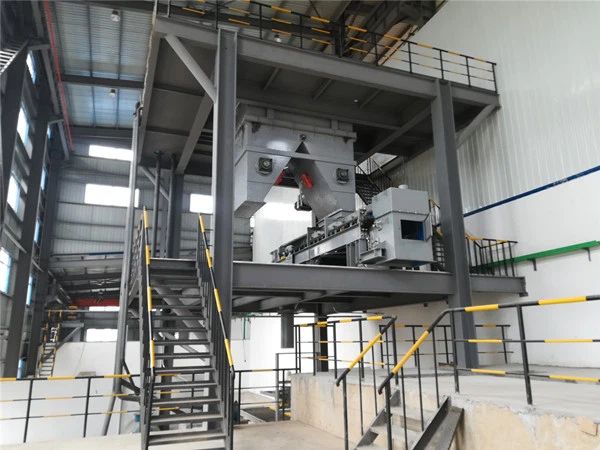
Not only that, but according to APNI data, there are 136 plants in total in terms of the number of plants already in operation, construction stage, planning and so on. More than 400 million tons of nickel ore are expected to be consumed if the full plant is opened.
Given the scale of the pyrometallurgical plant, the government is reportedly offering investors the opportunity to build a hydrometallurgical plant to support the electric vehicle battery scheme.
"A lot of the media asked me if the nickel raw material would be re-exported if Indonesia lost at the WTO panel. I said it might be re-exported. Why? Just look at the difference between international nickel prices and local nickel prices, "he said.
Until now, he said, the government still looked at one of Europe's stock exchanges when determining the mineral reference price (HMA) as the basis for calculating the domestic benchmark nickel price (HPM), which is based on average nickel prices and the exchange's price movements over the past two months. When the government determines the HPM of nickel in the country, referring to the country's exchanges, the discount is as much as 45 percent.
"That means the international nickel price is much higher than the local nickel price," he said
The media also asked about APNI's support for Indonesia. He stressed that APNI certainly supports the Indonesian government's policies, including the development of downstream nickel processing industries. That is because the more downstream industries there are, the greater the opportunity for miners to pick up nickel.
According to him, the success of downstream industries must be balanced with conditions upstream. From the reform of mining management, nickel trading system and other upstream still facing problems.
In the delivery of materials, Meidy Karin Lengkey also submitted a proposal to the government for regulation of limonite HPM and other concomitant components such as cobalt. That's because hydrometallurgical plants already need limonite and cobalt as raw materials for electric car batteries.