


The largest recent media quoted officials from the Ministry of Petroleum and Minerals of Afghanistan as saying that on August 6, the founder and chairman of Australian iron miner FMG, Andrew Forrest, held a conference call with the country’s President Ashraf Ghani to discuss investment opportunities in Afghanistan’s minerals. Forrest also plans to visit Kabul, the capital of Afghanistan, in October this year.
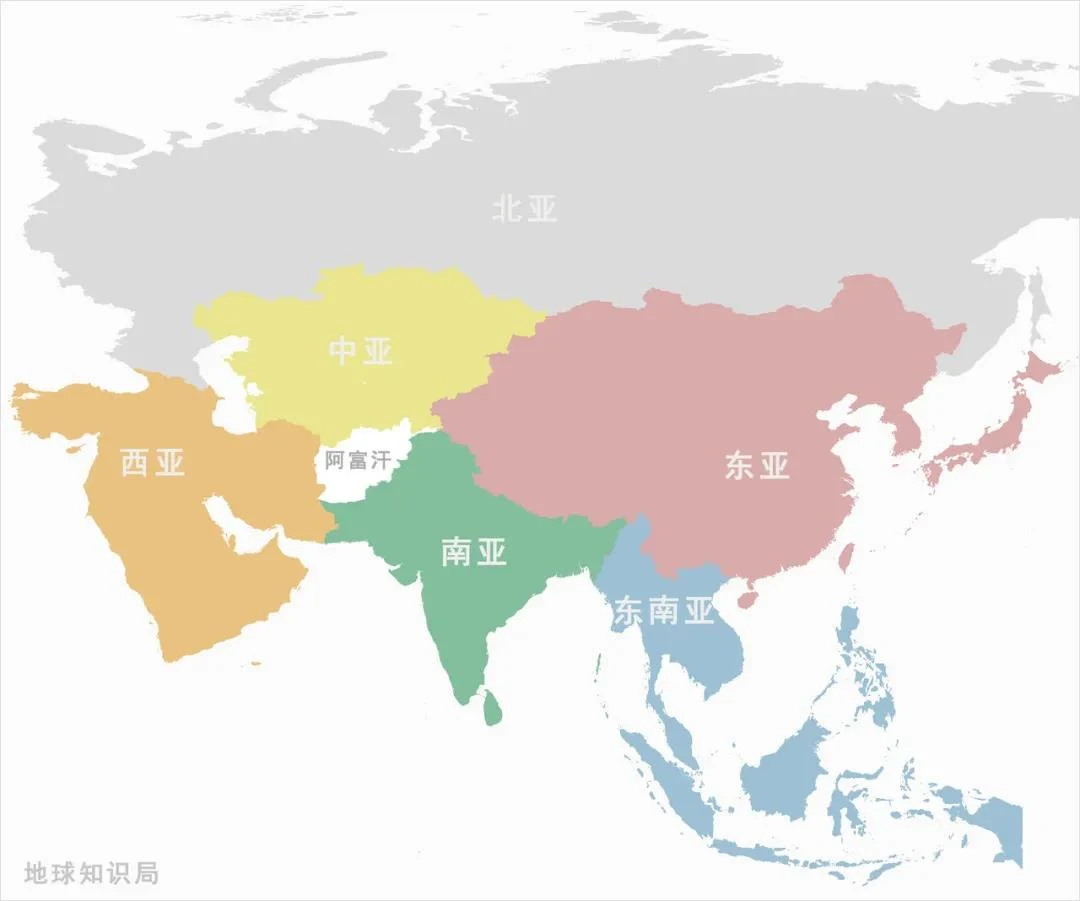
Afghanistan is located in the interior of Eurasia, at the crossroads of East Asia, South Asia, West Asia and Central Asia, and borders China through a long and narrow corridor. It has an important geographic location. However, due to the lack of access to the sea and the perennial war, the economy Very backward.
The former Soviet Union fought in Afghanistan for ten years, but failed to win this Central Asian country, and instead allowed Islam to spread in the country. The U.S.-led war in Afghanistan broke the rule of Islam, but it also fell into another quagmire that lasted more than ten years, until reconciliation with the Taliban was achieved earlier this year.
Iron and copper resources in Afghanistan
Afghanistan has huge iron ore, copper ore and gold resources, but none of them have been effectively developed. After the war in Afghanistan, the new government led a series of mega-mining project tenders, including the Aynak copper mine project in 2007 and the HAJIGAK iron mine project in 2010.
The Aynak Copper Mine is located in Lugar Province, Afghanistan, about 35 kilometers southeast of the capital city of Kabul. The deposit was discovered in the 1970s, with a total proven copper ore reserves of 705 million tons, a copper-gold content of 11 million tons, and an average copper content of 1.56%. In November 2007, the consortium of China Metallurgical Group and Jiangxi Copper Group defeated many opponents and won the right to develop the copper mine. According to its bidding plan, the construction content includes: an open-pit mine, an underground mine, a concentrator, a smelter, and a refinery; the annual production scale of refined copper is 220,000 tons; the supporting construction of a 400,000 kilowatt thermal power plant and its Transmission lines, a water source pumping station and a phosphate fertilizer plant. The total project budget is about 4.2 billion US dollars, and the project construction period is 5 years. The project also includes a railway construction plan across Afghanistan, with a long-term investment of 10 billion U.S. dollars. The China Metallurgical Consortium has carried out part of the exploration work after signing the contract. However, as Buddhist sites were discovered on the surface of the mining area, the project was interrupted and has not yet been restarted.
The Hajji Jacket Iron Mine is located in the Hajji Gak area of Bamian Province (the central area is 34.667 north latitude, 68.067 east longitude). The iron ore stretches for 32 kilometers and includes 16 independent blocks with a total reserves of approximately 2-25 billion tons. It is composed of hematite and magnetite, with an average grade of 62%. It is one of the largest unexploited iron ore in Asia. In 2010, the Afghan government awarded 3 of the 4 blocks of the project to a consortium of 7 state-owned and private companies in India (led by Indian state-owned Steel Authority of India Ltd and NMDC Ltd), the fourth block Awarded to Kilo Goldmines Ltd of Canada. In addition to mine development, Indians also plan to invest 10.8 billion U.S. dollars to build steel plants, power stations and railways, but the aforementioned promises have not been fulfilled. Some public opinion believes that Indian and Canadian companies won the bidding because they have close ties with former government officials, and the companies concerned have not signed the contract three years after winning the bid and violated the Afghan mining law. Therefore, President Ghani is required to treat Haji jacket iron ore. The project is re-tendered. The biggest challenge for the development of the Haji Jacket Iron Mine is that it is located in a high altitude area above 4000 meters, with very inconvenient transportation, and the long transportation distance from the major steel production centers in Asia and high cost.

Australia and Afghanistan-Investment Opportunities for FMG
Although Australia and Afghanistan are far apart, their governments and people have close relations. Australia is Afghanistan’s largest country of overseas immigrants. Australia has also participated in the US-led war in Afghanistan and has stationed troops in Afghanistan for a long time. Koala knows many friends in the Australian industry who have stationed in Afghanistan.
Generally, Australian mining companies are more picky about the destination countries for overseas investment. The weak control of the Afghan central government and the corrupt political system from top to bottom make these mining giants who insist on high operating standards discourage them. Among these giants, FMG may be the most adventurous company. The prestige of old Andrew makes this company have decision-making and execution capabilities that other diversified mining giants do not have. The high level of iron ore operation in the past two years has allowed FMG to accumulate a large amount of cash wealth and is willing to expand overseas. Prior to this, FMG has deployed in battery metal materials and South American copper exploration. The opening of contact with the Afghan government this time is not surprising. It's just that whether the Afghan government will withdraw the two major mineral contracts that it has previously awarded is worthy of Chinese investors' attention.
Evaluation: Compared with Afghanistan, Simandou, which is far away in West Africa, may have more development value due to its first-class quality, acceptable transportation distance and relatively better development environment. Recently, as Caixin Luo Guoping's article reported, the development of Simandou has heated up again. Friends who are interested in participating in the discussion can contact Koala and join the Simandou Iron Mine Investment Discussion Group.


