Total nickel production in the third quarter of 2020 was 3,750 tonnes, down 9% from 4,139 tonnes in the third quarter of 2019.
Cobalt production in the third quarter of 2020 was 409 tonnes, down 6 per cent from 436 tonnes in the third quarter of 2019.
Consistent with previous disclosures, final production of nickel and cobalt for the third quarter of 2020 was affected by the planned relocation of plant shut-down and maintenance activities at the Fort Saskatchewan Refinery (from June to July) and a four-day extension of shut-down.
The extension of the outage was due to the limited availability of local contractors and other identified areas of repair.
The decision to rescheduling downtime and maintenance activities is a safety measure taken to prevent the spread of COVID-19.
The Moa joint venture is still on track to meet its 2020 production targets of 23,466 tonnes of nickel and 2,468 tonnes of cobalt (on a 100 per cent basis) by the end of the year on 30 September 2020.
Finished nickel sales in the third quarter of 2020 were 3,568 tonnes, down 14% from 4,145 tonnes last year.
The decline was mainly due to the closure of the Fort Saskatchewan refinery and the timing of nickel deliveries.
In the third quarter of 2020, finished cobalt sales increased 14% to 501 tons and fertilizer sales increased 44% to 36,169 tons.
This is due to delivery times and strong market demand, respectively.
Due in large part to a 14% decline in nickel sales and an 8% decline in average realized nickel prices, Moa joint venture's revenue declined 13% to $97.7 million in the third quarter of 2020 from $112.2 million in the third quarter of 2019.
Higher volumes of cobalt and fertilizer offset some of the price declines, although the realized prices of cobalt and fertilizer fell 5% and 16%, respectively, compared with last year.
In addition, nickel market conditions continued to improve in the third quarter of 2020, continuing the trend that began in the second quarter by easing lockdown restrictions associated with the COVID-19 pandemic and the resumption of economic and manufacturing activity, particularly in China, according to the report.
Nickel opened at $5.69 a pound on the London Metal Exchange (LME) on July 1 and closed at $6.52 a pound on September 30, up 15%.
Nickel stocks on the London Metal Exchange and Shanghai Futures Exchange held relatively steady as prices rose in the third quarter.
Total inventories totaled about 263,000 tons on Sept. 30, up from about 262,000 tons on June 30.
Nickel stocks on LME and SHFE have remained relatively stable despite a decline in global stainless steel production year-to-date.
As a result of the spread of COVID-19, nickel mines around the world have either drastically reduced production or entered the maintenance and maintenance phase.
The PRODUCTION of the Moa joint venture is largely unaffected by the spread of COVID-19.
New interest in electric vehicles and optimistic expectations of faster demand growth over the next few years sparked speculative buying from commodity investors, keeping nickel prices on track through the fourth quarter.
In particular, many carmakers have shown that high-purity nickel will become the main metal in their battery chemistry.
By October 20th nickel had risen to $7.16 a pound, its highest price since early 2020.
New interest in nickel is expected to drive higher prices through 2021.
In the medium term, nickel prices are expected to fluctuate given the continuing economic uncertainty caused by the outbreak.
As mining operations resume production, nickel inventory levels are likely to rise as supply is likely to exceed demand as large sectors that consume large amounts of stainless steel (such as food and hospitality) experience a delayed or slower economic recovery, especially if the second wave of the pandemic lasts longer.
Given the uncertainty, many industry analysts have cut their forecasts for end-consumer nickel demand, reflecting negative sentiment towards the end of 2021.
Nickel demand was previously expected to grow by about 3 per cent a year until 2025.
Adding to the uncertainty is a sharp increase in nickel pig iron production, leading some industry analysts to predict a short-term nickel glut.
This development puts additional pressure on producers of low-grade materials such as ferro-nickel, which is currently sold at a high discount.
As a result, it is unclear what nickel prices will do in the near term.
In the longer term, as electric cars become more popular, demand for nickel, which and cobalt are key metals needed to make all kinds of energy-storage batteries, is expected to increase.
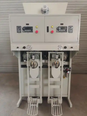
PUDA nickle packing machine:
DCS-TWJL Series big bag packing machine adopts screw feeding method, the high precision weighing system can guarantee the accuracy of packaging effectively. Put the opening of the filling bag on the discharging canister, then hang the braces onto the clamping device, start packing machine and clamp the opening automatically . The materials will be sent to the filling opening through the screw which is controlled by the frequency converters.Filling process will be divided into high, middle, low three-level speeds by the control feed mechanism, when the weight reach the preset value, the screw stops working, then loosen the bag and braces automatically by the control system. At last, move the finished packing bag by the forklift or other devices. This kind of machine has the function of bottom vibration, and can adjust the height according to the bag size. It could make the filling materials more compact to increase the capacity of the packing bag. It has the features of stable packing speed, high precision weighing, simple operation and easy maintenance, etc.