


Many customers often encounter a question when purchasing automatic palletizing equipment: What are the differences between robot palletizing machines and mechanical palletizing machines? If the wrong one is chosen, it will not only affect production efficiency but also increase maintenance costs. To help you make a more suitable choice, today we will elaborate on the differences between these two types of palletizing equipment from the perspectives of functional characteristics, application scope, and return on investment.
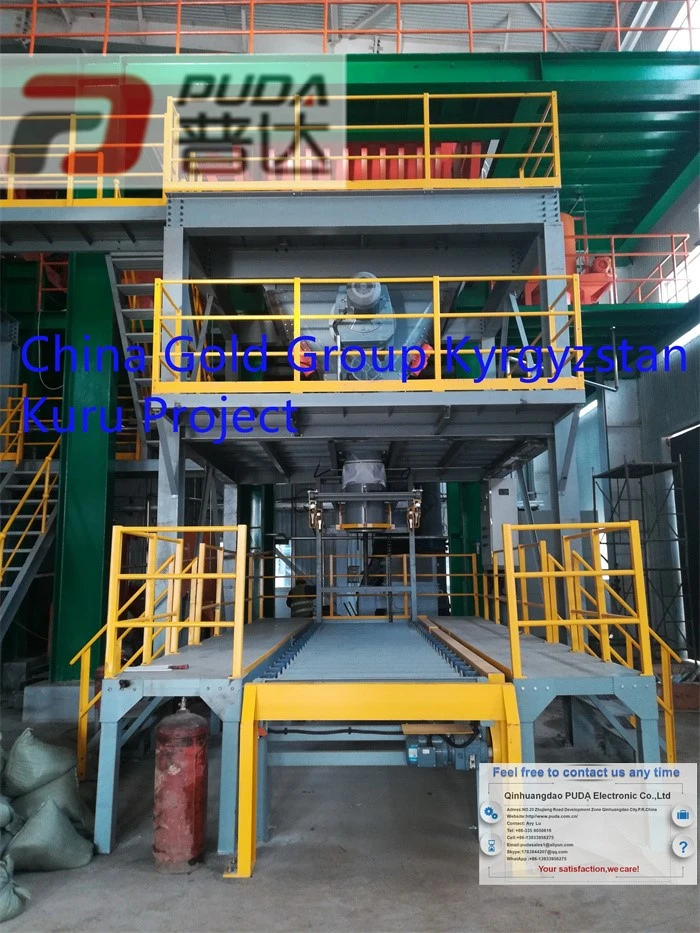
Firstly, from the structural principle, robot palletizing machines are based on multi-joint robotic arms and achieve flexible handling and stacking through program settings. They have high degrees of freedom in movement and flexible path planning, and can easily handle packaging materials of different sizes, shapes, and weights. In contrast, mechanical palletizing machines adopt traditional linear transmission structures and have relatively fixed movement patterns, suitable for applications with uniform material sizes and strong stacking rules.
In terms of application scope, robot palletizing machines show stronger adaptability and can flexibly meet the palletizing needs of different industries and various products, such as food, beverages, fertilizers, feed, building materials, and chemicals. While mechanical palletizing machines are more suitable for production lines with a single rhythm and relatively fixed product varieties, such as standardized bagged or boxed products.
From the perspective of investment and maintenance, robot palletizing machines have a relatively higher initial investment, but due to their flexibility and automation level, they can significantly improve production efficiency and reduce labor costs. In the long run, the return on investment is higher. In contrast, mechanical palletizing machine equipment has a simple structure, is relatively inexpensive, and is easy to maintain, suitable for small and medium-sized factories with limited budgets and small production changes.
Overall, if your production line needs to frequently change product specifications or you want to enhance the overall level of intelligence, robot palletizing machines would be a better choice; if the products are single, the scale is moderate, and the budget is limited, then you can consider mechanical palletizing machines.
When choosing palletizing equipment, it is recommended to combine your actual production situation with professional manufacturers to customize solutions, so as to truly achieve economic applicability and high durability.


